1,180 Loch Ness Monster Sightings, and Still No Proof
The Sighting That Started Before Photography Existed
The first written account of something strange in Loch Ness goes back to the year 565, when an Irish missionary named Saint Columba is said to have come across a mysterious creature in the water while crossing into what's now Scotland. That story sat mostly forgotten for over a thousand years. What actually built the legend most people know today happened in a much shorter window: 1933, the year sightings suddenly spiked, and the year a man named Hugh Gray took the first photograph anyone had ever managed to get of the thing, in November of that year. That single photograph did more to launch a global obsession with the Loch Ness Monster than thirteen centuries of oral history had managed on its own.
Why the Loch Ness Monster Became So Famous
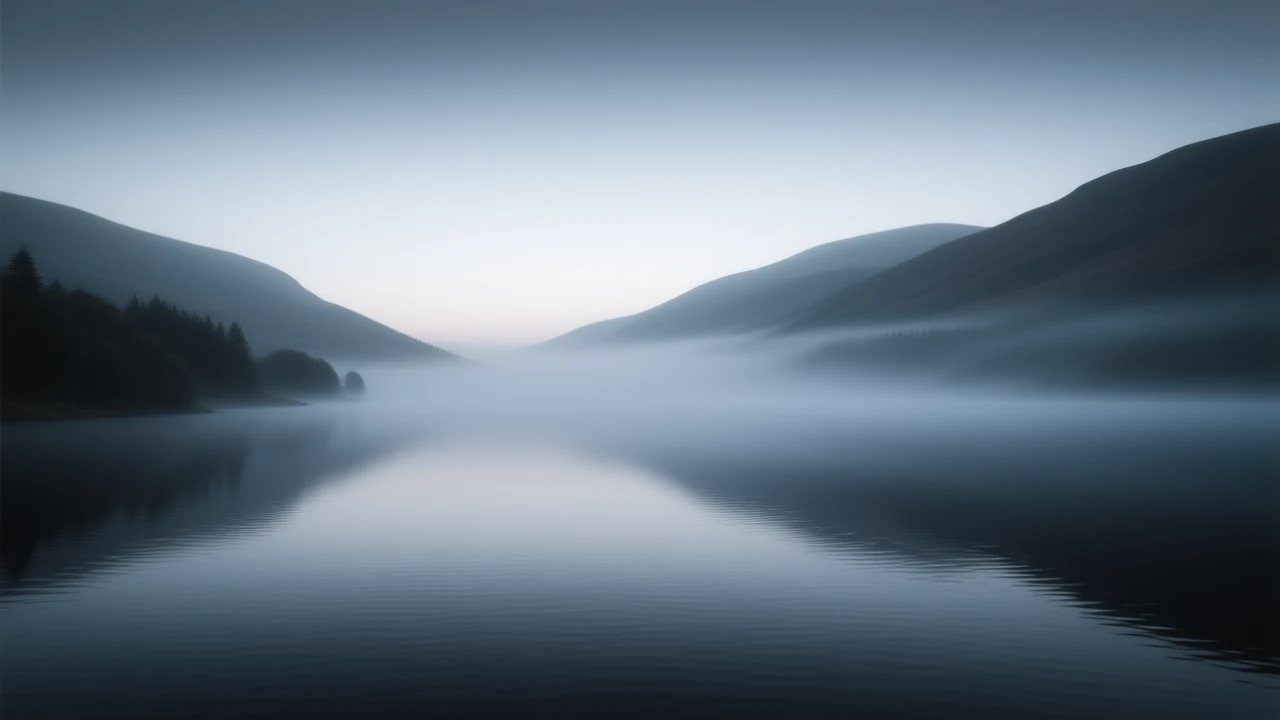
Part of what makes Loch Ness such a durable mystery, rather than just another lake with a rumor attached, comes down to the water itself. The loch runs 227 meters deep in places, deep enough to swallow most buildings stacked end to end, and it's stained almost black by peat runoff from the surrounding hills. Underwater visibility drops to close to nothing a few meters down. Divers who've worked the loch describe it less like swimming and more like reaching around in the dark. A submarine with cameras and sonar still struggles to get a clean image past a certain depth. If you were designing a hiding place for something large and shy, on purpose, this is roughly what you'd build.
The other consistent detail across generations of eyewitness accounts is the shape. Long neck, small head, a humped back breaking the surface. It's a description that lines up almost too neatly with a plesiosaur, the long-necked marine reptile that vanished along with the rest of the non-avian dinosaurs at the end of the Cretaceous. That resemblance alone is most of why the story has the shape it does, the same pattern that shows up across most cryptid sightings once you look closely at what people describe versus what turns out to be there. Nobody reports a blob. They report an animal that looks like it walked out of a natural history museum diorama.
The Photograph, and the Confession That Undid It
For close to a century, people have poured real money and real years into trying to settle the question, and the honest result is that nobody has ever produced the thing science actually needs: a body, a bone, a single piece of physical evidence that survives scrutiny. The closest the legend ever got to that kind of proof, and the image most people picture when they hear "Nessie," is the so-called Surgeon's Photograph from 1934, a grainy shot of a long neck rising out of still water. It ran in newspapers for decades as close to hard evidence as the case had. Then, in the 1990s, one of the men involved in taking it admitted before he died that it had been staged with a toy submarine and a sculpted head. Decades of credibility, undone by a model kit.
That reveal is what turns this from a simple monster story into something messier and more interesting: a hundred years spent unable to tell whether the world is looking at a genuine unsolved mystery or a bit that got out of hand and became one of the more effective tourism campaigns of the twentieth century. Every long-running cryptid case seems to collect its own version of this moment, its own historical evidence that looked solid right up until it didn't. Both things being true at once, for different sightings and different decades, is probably closer to the real answer than either version alone.
What Sonar Keeps Finding, and What DNA Says Instead
Modern searches haven't closed the case either, and not for lack of trying. The sightings register has logged well over a thousand reports at this point, and large-scale sonar sweeps of the loch go back decades. Operation Deepscan, run in 1987, sent a line of boats across the water with echo sounders running the entire crossing, and it came back with sonar contacts in deep water that the team running it couldn't explain or match to any known object. Whatever those returns were, they moved.
What actually shifted the scientific conversation came from a very different kind of search. In 2019, a team from the University of Otago in New Zealand ran an environmental DNA survey of the loch, filtering the water itself for traces of genetic material left behind by anything living in it, no visual sighting required. The results ruled out any large reptile or leftover dinosaur lineage entirely. What they did find, in striking volume, was eel DNA.
| Explanation | What points to it | Where it falls apart |
|---|---|---|
| Surviving plesiosaur | Matches the long-neck, humped-back shape reported for generations | Would need a breeding population making regular air-breathing trips; the eDNA survey found no reptile genetic trace at all |
| Unusually large eel | Eel DNA turned up in far greater volume than any other species tested; eels are already known to occasionally grow past normal size in isolated water | Doesn't explain older accounts of a long neck rising well above the surface, which eels don't do |
Neither answer closes the file completely, and that's probably the most honest thing that can be said about it, the same blurred line between cryptids and legends that shows up everywhere this genre gets examined closely.
The Register Is Still Open
Here's the detail that sticks with me more than any sonar reading or DNA result. That register is still active. People still send in reports, still upload blurry phone photos and webcam stills, decades after a genetically dry answer landed and years after a founding photograph turned out to be a toy in a bathtub. One woman named Annette was scanning the water with binoculars when she noticed something dark and moving, and later said it looked alive, according to a recent report. Divers have even found a film prop resting on the loch bed, sunk there in 1969 during a movie shoot and mistaken for the real thing more than once since.
- A missionary's account from 565.
- A toy submarine that fooled newspapers for sixty years.
- An eel study that answered a question nobody thought to ask that way.
- And still, a running list of names and dates and blurry photographs that keeps growing anyway, because a cold, complete, DNA-backed answer turns out to be a much less satisfying place to end a story than an open one.
The data points mostly toward eels. The story, evidently, isn't done needing something bigger.