The Point Pleasant Dossier: Unpacking the Original Sightings
The Point Pleasant Dossier: Unpacking the Original Sightings
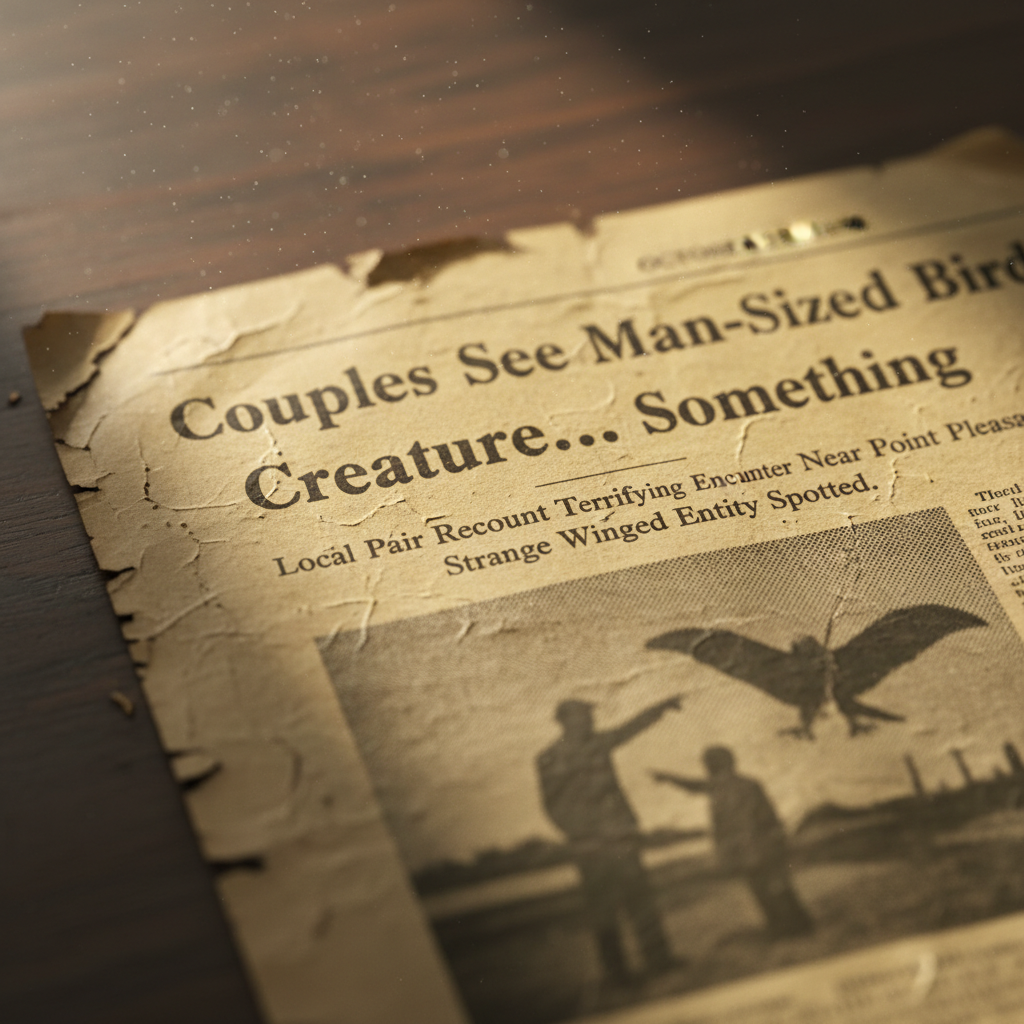
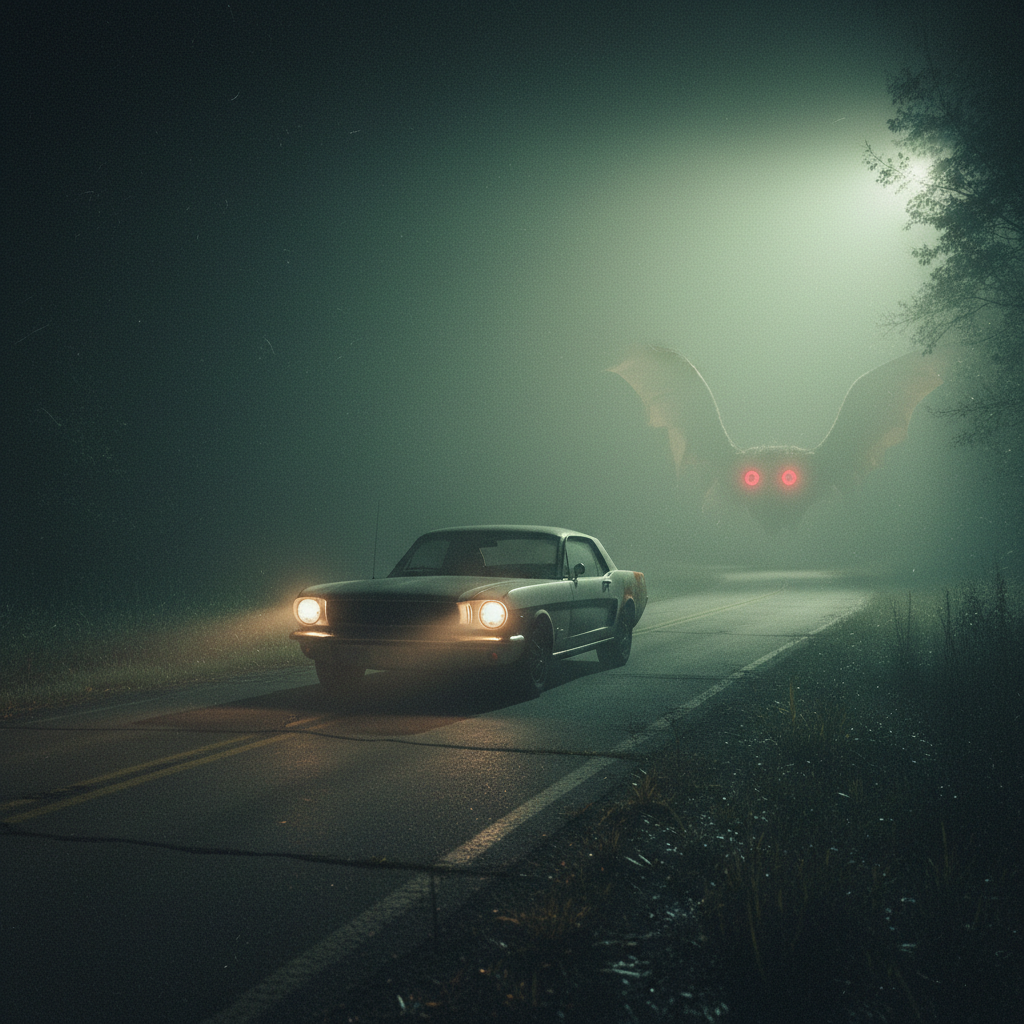
The chronicle of the Mothman does not begin in the nebulous realm of ancient folklore, but on a precise date: November 15, 1966. In the liminal space of Point Pleasant, West Virginia, two young couples—Roger and Linda Scarberry, alongside Steve and Mary Mallette—were driving near the abandoned North Power Plant, a relic of WWII munitions manufacturing known locally as the 'TNT Area'. What they reported seeing would ignite a 13-month period of high strangeness that would forever brand the town's identity. Their testimony described a creature that defied simple categorization: a man-sized, bipedal entity with a ten-foot wingspan and, most hauntingly, two large, hypnotic red eyes that glowed with an internal luminescence. The creature, they claimed, pursued their car at speeds exceeding 100 mph along Route 62.
This initial report was not an isolated incident. It was merely the catalyst. Over the next year, more than 100 eyewitnesses would come forward with similar accounts. The historical record, preserved in local newspaper archives and investigator notes, paints a picture of a community gripped by a genuine and terrifying phenomenon. The evidence is not physical, but testimonial, forming a compelling psychological artifact of a town on edge.
- Key Witness Accounts: The Scarberry/Mallette sighting remains the archetype, but others added disturbing details. Newell Partridge, a local contractor, reported seeing similar red eyes near his television set before his dog vanished. Marcella Bennett and her family reported a gray creature rising from the ground near the TNT area, its glowing eyes fixed upon them.
- Geographic Focus: The majority of sightings were concentrated around the TNT Area, a sprawling, 7,000-acre tract of overgrown wilderness dotted with concrete bunkers and decaying industrial structures. This setting, a literal ghost of a past war, provided the perfect backdrop for a modern monster.
- The Ominous Climax: The sightings abruptly ceased after December 15, 1967. On that day, the Silver Bridge, which connected Point Pleasant to Gallipolis, Ohio, catastrophically collapsed during rush-hour traffic, killing 46 people. In the aftermath, a new layer was added to the mythos: the Mothman was not a monster, but an omen, a harbinger of the impending doom. This narrative, while lacking direct proof, provides a powerful emotional core to the historical accounts of the Mothman phenomenon.
The Cultural Echo Chamber: From Local Anomaly to Global Myth
The Cultural Echo Chamber: From Local Anomaly to Global Myth
The Mothman could have remained a bizarre footnote in West Virginian folklore, but it instead metastasized into a global urban legend. This transformation was not accidental; it was fueled by the unique socio-cultural anxieties of 1960s Appalachia and amplified by media. Point Pleasant in that era was a community grappling with economic shifts and the pervasive, low-level dread of the Cold War. The TNT area itself was a constant reminder of potential apocalypse. The creature, with its alien and technological-seeming characteristics (glowing eyes, metallic skin reports), became a vessel for these unnamed fears—a tangible manifestation of the unknown.
The primary architect of the global myth was author and paranormal investigator John Keel. His 1975 book, The Mothman Prophecies, collected the eyewitness accounts and wove them into a complex tapestry of UFOs, Men in Black, and precognitive warnings. Keel didn't just report the story; he curated it, framing the Mothman as a supernatural entity caught in a cosmic drama far beyond human comprehension. This narrative framing proved irresistible and became the definitive version of the legend, later adapted into a major motion picture that cemented its place in popular culture.
- Folkloric Evolution: The creature transitioned from a local 'boogeyman' or 'monster' to a complex figure, often interpreted as a tragic Cassandra-like prophet.
- Economic Symbiosis: The town of Point Pleasant eventually embraced its monster. The legend that once terrified its citizens now fuels its tourism industry. The annual Mothman Festival, a dedicated museum, and a striking chrome statue of the creature demonstrate a community's unique ability to commodify its own folklore.
- A Digital Afterlife: In the internet age, Mothman thrives as a piece of digital folklore. It is a recurring subject in Creepypasta, paranormal forums, and podcasts, constantly being reinterpreted by new generations. It stands as a prime example within The Global Encyclopedia of Urban Legends of how a localized event can achieve viral, mythological status.
The Skeptic's Spectrum: Misidentification and Collective Psychology
The Skeptic's Spectrum: Misidentification and Collective Psychology
While the narrative of a supernatural omen is culturally potent, a more prosaic collection of theories provides a compelling counter-argument to the historical evidence. From a scientific and psychological perspective, the Mothman phenomenon is a classic case study in perception, interpretation, and collective anxiety. The most widely accepted skeptical explanation posits that the 'creature' was not a single entity, but a series of misidentifications of large, native birds, viewed under poor lighting conditions by startled witnesses.
The environment of the TNT area—dark, desolate, and eerie—is a critical factor. Human perception is notoriously unreliable in stressful situations and low-visibility environments. The brain's tendency to assemble incomplete data into a recognizable (and often threatening) pattern could easily transform the silhouette of a large bird into a monstrous humanoid. This explanation doesn't invalidate the witnesses' fear; it simply reattributes its source from the supernatural to the psychological.
- The Avian Candidates: Several bird species native to West Virginia fit parts of the description.
- Sandhill Crane: This is the leading candidate. It is a large bird that can stand nearly as tall as a human, possesses a massive wingspan, and has distinct reddish coloring around its eyes. Its call is a startling, guttural shriek.
- Great Horned Owl or Barred Owl: These large predators have enormous, seemingly glowing eyes (a result of the tapetum lucidum reflecting light) and can appear shockingly large when taking flight suddenly at close range.
- Great Blue Heron: Another large, prehistoric-looking bird that, when startled, can appear imposing and unnatural.
- Collective Psychology: Once the initial, sensationalized story broke in the local press, a psychological feedback loop likely began. Sociologists and historians point to the possibility of mass hysteria or a 'collective delusion,' where communal anxiety finds a shared focal point. Subsequent sightings may have been influenced by expectation and confirmation bias, as residents began actively looking for the creature they had read about.
Mothman in the Cryptid Pantheon: A Comparative Analysis
Mothman in the Cryptid Pantheon: A Comparative Analysis
When placed alongside other famous cryptids, the Mothman occupies a unique niche. While creatures like Bigfoot or the Loch Ness Monster are typically framed as undiscovered biological species—reclusive animals hiding from humanity—the Mothman is almost always interpreted through a supernatural or paranormal lens. This distinction is crucial to understanding its enduring appeal and its function as a modern myth. The evidence, and the very nature of the legend, differs fundamentally from its cryptid cousins.
The comparison highlights what makes the Mothman so compelling as a piece of folklore. It isn't just a monster; it's a story with a beginning, a middle, and a tragic end, all compressed into a 13-month timeline. It speaks less to our curiosity about the natural world and more to our deep-seated fear of inexplicable disaster and the feeling that powerful forces operate just beyond our comprehension. This narrative completeness separates it from the ongoing, open-ended search for other unknown creatures.
- Nature of Evidence and Timeline:
- Mothman: The evidence is almost exclusively testimonial and tied to a specific time and place (Point Pleasant, 1966-67). It is a closed historical case file rather than an ongoing investigation.
- Bigfoot/Nessie: These legends are supported by a continuous stream of alleged physical evidence, including footprints, blurry photographs, and sonar readings. The search for them is perpetual.
- Symbolic Role:
- Mothman: Functions as an omen, a harbinger of doom, or an interdimensional being. Its presence is linked to a specific, tragic event, giving it a profound, almost allegorical weight.
- Bigfoot/Nessie: Represent the 'wild,' the untamed frontier, and the possibility of prehistoric survivors. They are symbols of nature's mysteries, not supernatural warnings.
- Cultural Legacy:
- Mothman: The story is a cautionary tale about technology, fate, and the limits of human perception. It resonates with a modern, technological society's anxieties.
- Bigfoot/Nessie: These tales tap into a more primal, romantic notion of an undiscovered world, a key reason they are mainstays in The Global Encyclopedia of Urban Legends.
Frequently Asked Questions
A1: No. No official biological evidence, such as a body, feathers, or DNA, has ever been recovered. The historical evidence consists entirely of eyewitness testimonies from the 1966-67 period and the circumstantial connection made to the Silver Bridge collapse. The scientific consensus leans heavily towards explanations involving misidentification of known animals or complex psychological phenomena.
A2: The leading skeptical theory is the misidentification of a large bird, most likely a Sandhill Crane or a large owl (like the Great Horned or Barred Owl). These birds can have impressive wingspans and reddish eye markings or reflections that, under stressful, low-light conditions, could easily be perceived by a startled witness as a monstrous, humanoid creature.
A3: Its endurance is tied to its powerful and adaptable symbolism. The Mothman story merges classic monster folklore with modern anxieties about technological failure (the bridge collapse) and unexplained disasters. It functions as a potent modern myth, a cautionary tale that explores the terrifying boundary between the known and the unknown, making it a perpetually compelling subject for books, films, and digital folklore.