

The Primal Blueprint: Why Our Brains Manufacture Monsters
The flickering campfire, the deep woods, the static-laced broadcast—these are the modern altars where we conjure our monsters. From the Pacific Northwest's elusive Sasquatch to the Mothman of Point Pleasant, these creatures exist in the liminal spaces of our world, lurking at the edge of perception. But what if the true habitat of these cryptids is not the desolate forest or the murky loch, but the intricate, ancient architecture of the human brain? The search for a biological explanation for cryptid sightings is not an attempt to dismiss these powerful myths, but to understand their genesis. It is an autopsy of belief, tracing the origins of these figures back to fundamental cognitive and biological mechanisms.
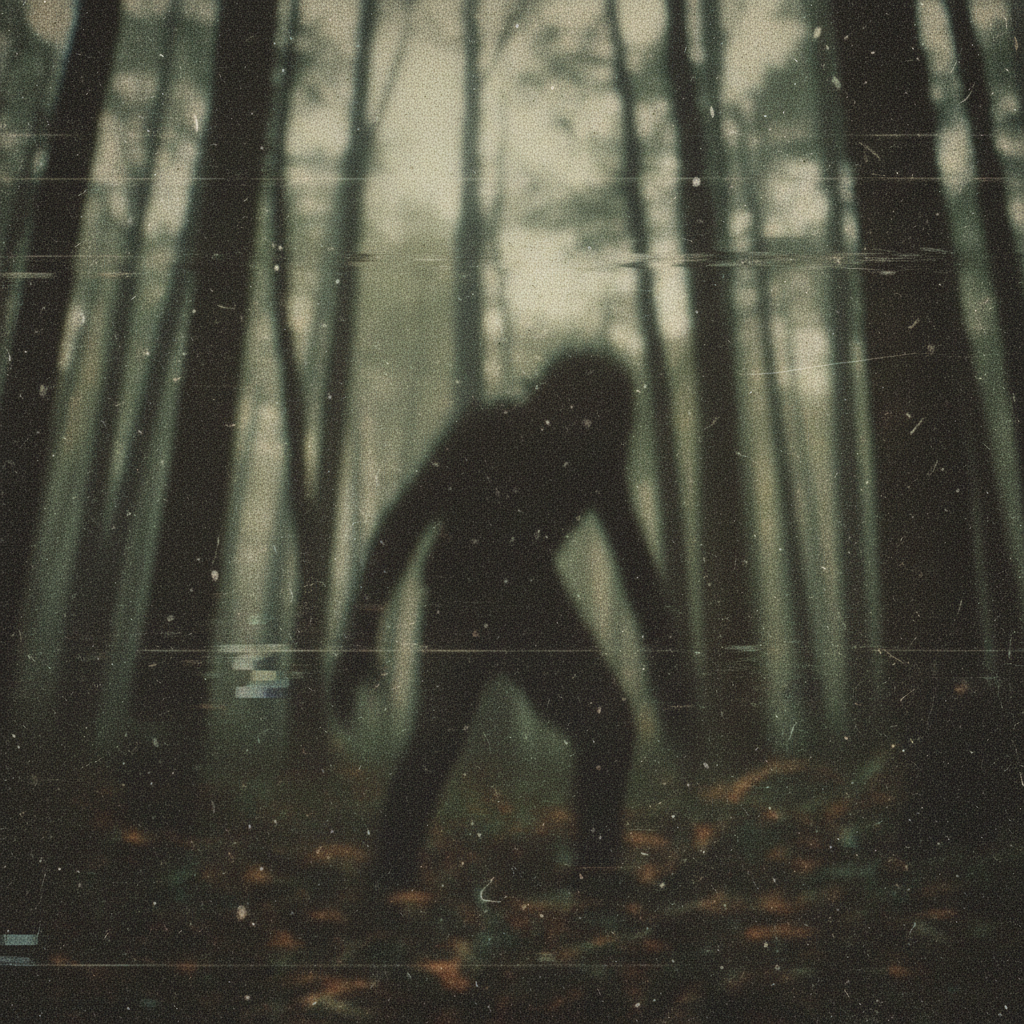
Our brains are pattern-recognition engines, a product of an evolutionary past where failing to see a predator in the rustling leaves was a fatal error. This hypersensitivity leads to cognitive biases like pareidolia, the tendency to perceive meaningful patterns in random stimuli. It's why we see faces in clouds, figures in wood grain, and, potentially, a hulking hominid in a shadowy tree stump. This isn't a flaw; it's a feature of a survival-oriented system. When a witness describes a fleeting glimpse of something 'not quite right'—a shape that moves too fast, a silhouette that defies easy categorization—they are often describing the moment their brain's pattern-matcher fails, defaulting to a primal, archetypal template of a threat. This process is the fertile ground from which the seeds of folklore sprout, transforming a mundane event into a narrative of the monstrous. The Global Encyclopedia of Urban Legends documents countless such instances, where an ambiguous perception becomes codified into a creature with a name and a territory.
A Bestiary of Misidentification: From Kraken to Mothman
History provides a compelling timeline for the evolution of our understanding. For centuries, sailors' tales of the Kraken, a tentacled leviathan capable of dragging ships to the ocean floor, were dismissed as drunken fantasy. It was not until 1857 that the Danish naturalist Japetus Steenstrup scientifically described the Architeuthis dux—the giant squid. The myth was, in fact, a distorted echo of a real, awe-inspiring biological entity. The Kraken wasn't a monster; it was a poorly documented animal viewed through a lens of terror and incomprehension. This serves as a powerful model for modern Cryptozoology. Many of the most enduring cryptids can be plausibly explained by the misidentification of known fauna under duress or poor conditions.
Consider the case of Bigfoot. A significant portion of sightings occur in environments populated by black bears. A bear, particularly one suffering from mange which causes hair loss and skin discoloration, can appear eerily gaunt and humanoid. When it stands on its hind legs to get a better vantage point, its silhouette can be profoundly unsettling and ape-like to the unprepared observer. Similarly, the infamous historical evidence of the mothman, with its glowing red eyes and vast wingspan, aligns remarkably well with the appearance of a large owl, such as a Barred Owl, caught in a car's headlights. The 'glowing' eyes are a result of the tapetum lucidum, a reflective layer in the eyes of many nocturnal animals, and the sudden, silent flight can create an impression of otherworldly speed and size. The monster is not an invasive species from another dimension, but a native species seen out of context.
The Evolution of Evidence: From Eyewitness to Environmental DNA
The methodology for investigating the unknown has undergone a radical transformation. What was once the domain of folklore collectors and amateur adventurers is now being approached with the tools of forensic science and environmental biology. The very definition of 'evidence' has evolved, shifting from subjective accounts to objective, analyzable data. This table illustrates the dramatic shift in how we investigate the biological basis of cryptid sightings.
| Aspect | Past (Pre-1980s) | Present (1980s - 2010s) | Future (2020s & Beyond) |
|---|---|---|---|
| Primary Evidence | Anecdotal eyewitness accounts, folklore, blurry photographs, plaster casts. | Grainy video footage (V/H/S, early digital), audio recordings of 'calls', physical trace analysis (hair, scat). | High-resolution drone footage, environmental DNA (eDNA) from soil/water, AI-powered analysis of audiovisual data, satellite imagery. |
| Analysis Method | Narrative comparison, subjective interpretation, mapping sighting clusters (e.g., local legends of cryptids map). | Basic forensic analysis (often inconclusive), spectrographic analysis of audio, image stabilization and enhancement. | CRISPR-based gene sequencing of eDNA, machine learning models to identify known species from ambiguous footage, advanced sonar mapping. |
| Underlying Philosophy | Belief-driven; seeking proof of existence. Often framed as zoological discovery. | Skeptical inquiry; focused on debunking or finding a prosaic explanation through known science. | Data-driven ecosystems analysis; seeking to identify *all* biodiversity in an area, with cryptids as potential anomalies to be resolved. |
| Psychological Factor | Treated as reliable testimony unless proven otherwise. The witness is the central authority. | Witness testimony is considered highly fallible; focus on cognitive biases and memory reconstruction. | Neuro-imaging and psychological studies to understand the 'sighting experience' itself as a neurological phenomenon. |
The Future of the Hunt: Digital Folklore in the Age of Genomics
As we move deeper into the 21st century, the biological explanation for cryptid sightings is poised to become vastly more precise. The most revolutionary tool is Environmental DNA (eDNA). By simply taking a sample of water from Loch Ness or soil from a forest where Bigfoot was allegedly seen, scientists can sequence the DNA of every organism that has recently passed through. This technique allows for a comprehensive biological census without ever seeing the animals themselves. To date, extensive eDNA surveys of Loch Ness have found no evidence of plesiosaur DNA, but have identified large quantities of eel DNA, giving a potential, if less dramatic, biological source for the Nessie legend.
Simultaneously, artificial intelligence and machine learning are being deployed to sift through the mountains of 'evidence' that populate the internet. AI algorithms can analyze shaky footage with a stability and objectivity that a human cannot, comparing silhouettes against vast databases of known animals moving in unusual ways. They can filter audio recordings, distinguishing background noise from potential animal vocalizations with incredible accuracy. However, this technological advancement creates a fascinating paradox. While science is systematically eliminating the shadows where monsters can hide, our culture's ability to create new ones is accelerating. The rise of Creepypasta and digital legends like Slender Man demonstrates that our need for the monstrous is not diminishing. These are cryptids born not of misidentification in a forest, but of collective anxiety in the digital wilderness.
The future of this field lies not in definitively proving or disproving the existence of every cryptid. Rather, it lies in understanding the enduring human need for mystery. Technology will likely explain away most classic cryptids, identifying them as known species or geological phenomena. But the archetype of the unknown creature—the thing that watches from just beyond the light of the fire—will persist. It will evolve, adapting to new technological landscapes and new societal fears. We will close the book on Bigfoot, only to find a new, more terrifying story being written in the ghost-code of our interconnected world.