Was the Jersey Devil a Cursed 13th Child — or a Colonial Publisher the Church Wanted Ruined?
A Hockey Team Named After a Monster
New Jersey’s NHL franchise is the New Jersey Devils, and the name comes from a creature nobody has ever proven exists. When a state’s professional team takes its name from a legend, you can tell how deeply that legend is woven into the place. This one lives in the Pine Barrens of southern New Jersey, and it belongs on any shortlist of regional American cryptids, next to the Mothman.
Two Mothers, One Curse
The origin stories don’t agree. The most widely repeated one, which the Pinelands Alliance describes as the most widely held belief, is set in the eighteenth century: a woman named Leeds, already burdened with twelve children, learned she was expecting a thirteenth and cursed the child, who was born as a monster. A second version says a mother cursed a deformed child she had given birth to, and it was transformed into the Devil. In both, the number thirteen and the curse are the fixed parts, and everything else shifts with the teller.
What People Say It Looks Like
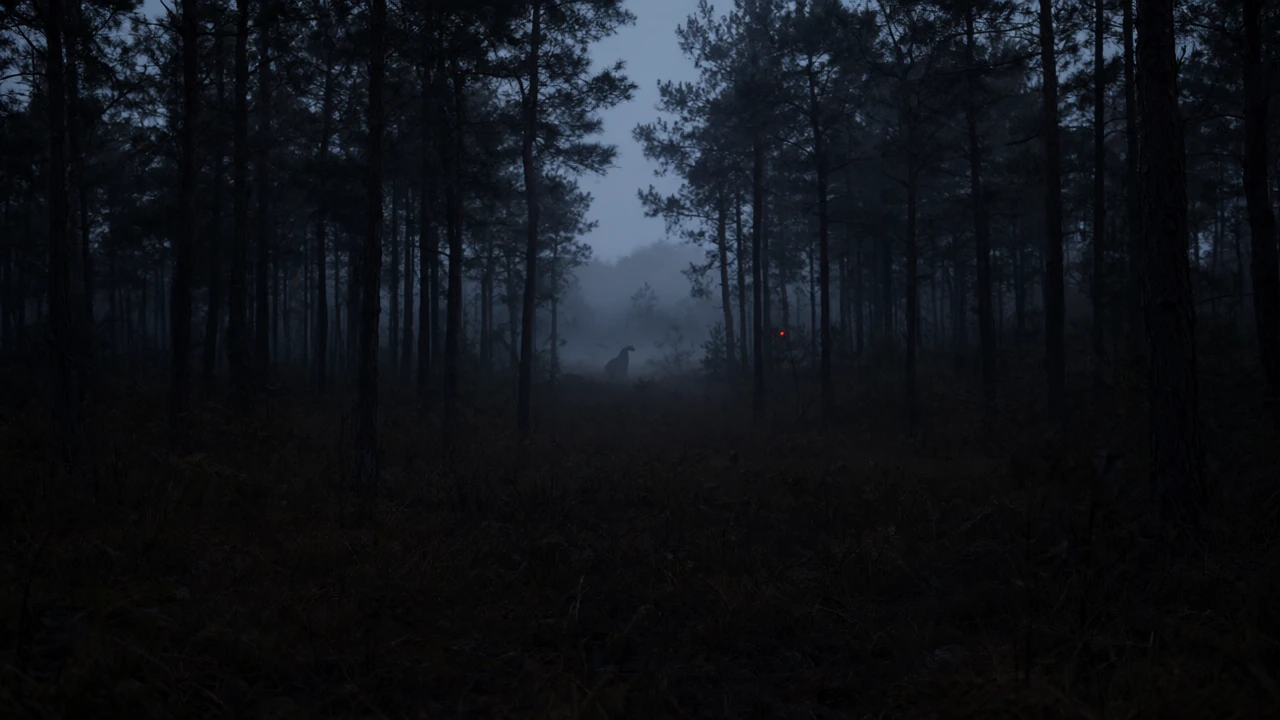
Descriptions are fairly consistent. It’s often called bat-like, but most witnesses describe a body closer to a hoofed animal, something like a horse. Estimates put it at roughly one to 1.8 metres tall, covered in black hair, with deep red eyes. The sightings cluster in the pine and swamp country of southern New Jersey. That mix of wings, hooves and red eyes sounds assembled from other folklore, which may be why it’s so easy to retell.
The Week of 16 to 23 January 1909
What turned a regional story into a famous one was a single week. Between 16 and 23 January 1909, thousands of people claimed to have seen it. The Wikipedia article and local histories describe reports spreading across New Jersey and into Pennsylvania, with schools closing, factories stopping and people staying indoors. Like the Japanese slit-mouthed woman in our piece on Kuchisake-onna, it is one of the few legends where large numbers of sightings were reported in the twentieth century, and newspapers helped feed the wave in the same way described in how rumors cause mass hysteria.
The Church-Conspiracy Version
There is another explanation, and it is the one I find most interesting. Historians such as the one quoted by New Jersey Humanities trace the monster’s real beginnings to colonial politics and religious disputes among Quakers. In the version I prefer, the original “Leeds Devil” was a smear: a seventeenth-century New Jersey publisher named Leeds, who printed books on astrology, magic and demons, fell out with the church, and the rumor of a demon bearing his name followed. Which of the stories is true is hard to say, but this one explains why a monster would carry a family surname at all.
A Monster That Became Local Merchandise
Whether it exists matters less now than what the town does with it. The hockey team uses it for a name, towns use it as a tourist hook, and it has turned up on screen too: The X-Files did an episode on it, and the 2012 film The Barrens is built around the legend. Compare that with how the Mothman’s 1966 sightings got tied to a real disaster. The Jersey Devil never had one event like that. It has a surname, a week of panic, and a very good logo.