
An Invitation to the Liminal: Deconstructing Hitori Kakurenbo
Hitori Kakurenbo (ひとりかくれんぼ), or One-Man Hide and Seek, is not a game. It is a ritual. Originating from the shadowy corners of Japanese internet forums, this procedure has metastasized into a global piece of digital folklore, a cautionary tale disguised as a challenge. It stands as a prime example within The Global Encyclopedia of Urban Legends of how ancient animistic beliefs can be repackaged for a modern audience hungry for liminal experiences. Unlike traditional ghost stories told around a campfire, Hitori Kakurenbo provides a script for direct invocation, a set of instructions that purports to open a door to something 'other'. This document serves not as an endorsement, but as an archival analysis of the ritual's mechanics, its inherent symbolic dangers, and the critical safety protocols that practitioners believe are the only barrier between curiosity and catastrophe. We will dissect the process as a folklorist would an ancient text, examining each component for its cultural and psychological weight.
The Ritual Blueprint: Step-by-Step Instructions and Safety Protocols
The successful—and survivable—execution of Hitori Kakurenbo hinges on meticulous adherence to a strict sequence of actions. Each step is layered with symbolic intent, designed to create a vessel, invite a spirit, and establish rules for a very temporary, and very fragile, truce. The following instructions consolidate various online sources, including foundational texts like The Ghost in My Machine's guide, emphasizing the non-negotiable safety measures.
Phase I: Preparation and Invitation
- The Vessel: Select a stuffed doll that has limbs. This is not to be a human-like doll, as it is believed the spirit may be reluctant to leave it. This choice speaks to our innate fear of the uncanny, a concept explored in why are humans scared of uncanny valley.
- The Anima: Carefully cut the doll open and remove its original stuffing. Replace it with uncooked rice. The rice symbolizes life force and acts as an offering to attract and sustain a spirit.
- The Personal Link: Add a piece of yourself to the doll—typically fingernail clippings or a strand of hair. This creates a powerful sympathetic link between you and the entity you are about to summon.
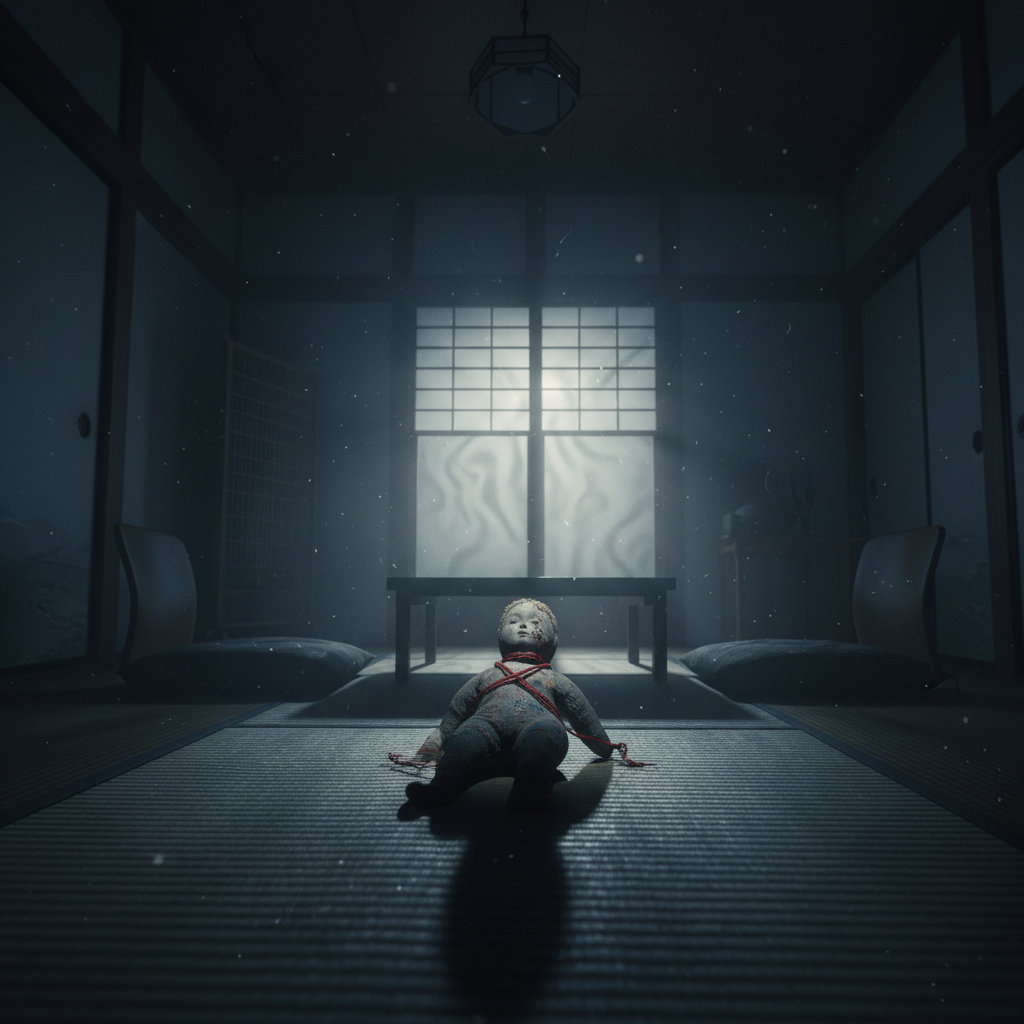
- The Binding: Sew the doll shut using a crimson thread. Once closed, wrap the remaining thread around the doll, binding it. The red thread is a powerful symbol, representing a blood vessel or a metaphysical tether.
- The Naming: Give the doll a name. Crucially, this must *not* be your own name. By naming it, you bestow an identity upon the vessel, making it a distinct entity.
- The Sanctuary and Purifier: Prepare a cup of saltwater. This will be your primary defense mechanism and the tool used to end the ritual. Place it in your designated hiding spot.
Phase II: The Game Begins (You are 'It')
- The Hour: The ritual must begin at 3:00 AM. This time is often considered the 'witching hour' or 'devil's hour,' when the veil between worlds is thinnest.
- The Incantation: Take the doll to a bathroom or a room with a basin of water. Holding it, you must say, "(Your Name) is the first it!" three times.
- The Submersion: Place the doll into the water-filled basin or sink.
- The Setup: Turn off all the lights in your home. Return to your hiding spot, turn on a television to a static channel (if possible), and close your eyes. Count to ten.
- The First Move: Return to the bathroom with a sharp object (traditionally a knife, though any pointed object suffices). Find the doll and say, "I have found you, (Doll's Name)!" Then, stab the doll, severing the red thread. This act is symbolic of breaking the initial bond and releasing the spirit's anger.
Phase III: The Hunted (The Doll is 'It')
- The Declaration: Immediately after stabbing the doll, you must chant, "Now (Doll's Name) is it!" three times.
- The Escape: Place the weapon beside the doll and immediately run to your hiding spot. This is the most critical juncture.
- CRITICAL SAFETY PROTOCOL: Once in your hiding spot, take a mouthful of the prepared saltwater. **Do not swallow it.** Keep the saltwater in your mouth for the duration of the game. It is believed to create a protective barrier, making you 'invisible' to the spirit. Remain absolutely silent. Any noise can betray your location. The game can last up to two hours. To end it sooner or at the two-hour mark, you must proceed to the final phase.
Phase IV: Terminating the Ritual
- The Search: Holding the saltwater in your mouth, leave your hiding place and search for the doll. It may not be where you left it. Be prepared for this.
- The Final Act: Once you find the doll, pour the remaining saltwater from the cup over it. Then, spit the saltwater from your mouth directly onto the doll as well.
- The Closing Statement: You must say, "I win!" three times, very clearly and firmly. This officially declares the end of the ritual.
- The Aftermath: It is strongly advised to let the doll dry completely and then burn it to dispose of it. Cleansing the house with salt or sage is also a recommended part of the post-ritual protocol.
The Metaphysical Mechanics: Symbology and Inherent Dangers
Hitori Kakurenbo is a tapestry woven from threads of animism, sympathetic magic, and deeply rooted folklore. Understanding the symbolic weight of each element reveals why the ritual is considered so perilous. It is not merely a game of hide-and-seek; it is an exercise in controlled possession, where the player willingly creates a conduit for an unknown entity and then attempts to sever the connection.
- The Doll as Fetish: In many cultures, a fetish is an object believed to have supernatural powers or to be inhabited by a spirit. By filling the doll with rice (life) and your own DNA (link), you are transforming an inanimate object into a purpose-built fetish, an attractive home for a wandering spirit.
- Rice as Spiritual Bait: Across Asia, rice is more than sustenance; it holds spiritual significance, often used in offerings to gods and ancestors. In this context, it serves as bait, a lure providing the energy a disembodied spirit might need to manifest.
- The Red Thread as Umbilical Cord: The crimson thread is a potent, dual-purpose symbol. Initially, it binds the spirit to the vessel. When you sever it with a knife, you are not just cutting string; you are performing a violent act of separation, symbolically 'killing' the initial bond and provoking the entity now tethered to the doll. It becomes a hostile player in the game.
- Saltwater as Amulet: Salt is a near-universal agent of purification and protection in folklore. From warding off demons to cleansing sacred spaces, its power is legendary. Holding saltwater in the mouth creates a personal, internal ward. Spitting it on the doll is an act of exorcism, forcefully expelling the entity and reclaiming dominance over the ritual space.
- The Danger of Naming: To name something is to give it power and reality. When you assign a name to the doll, you are elevating it from a simple object to a participant. The ritual's structure, a back-and-forth of being 'it', establishes a chilling parity between you and the entity you have just named and invited into your home. The core danger lies in the possibility that this entity may not wish to leave when the game is over.
The entire procedure is a high-stakes negotiation with an unknown force. The safety rules are not arbitrary; they are the contractual clauses in a paranormal agreement. Breaking them—swallowing the salt, making a noise, failing to end the ritual correctly—is considered a breach of contract, with potentially permanent consequences.
From 2chan to TikTok: The Digital Transmission of a Cursed Game
The story of Hitori Kakurenbo's rise is a case study in 21st-century folklore. Its origins are traced back to the Japanese internet forum 2channel (2chan) in the mid-2000s, a breeding ground for many of the internet's most enduring urban legends. From there, it was translated and migrated to English-language creepypasta wikis and forums like 4chan, where it found a global audience. Its appeal is multi-faceted, tapping directly into the modern phenomenon of psychology of legend tripping, where individuals seek out locations or rituals associated with paranormal legends to test their bravery.
What makes Hitori Kakurenbo so viral and persistent? Unlike legends about a specific haunted location, its horror is portable. The materials are mundane, available in any household. This accessibility transforms any home, the ultimate symbol of safety, into a potential stage for a supernatural encounter. The detailed, step-by-step instructions give it a veneer of authenticity, mimicking the structure of a real-world occult ritual. This format has proven irresistible for platforms like YouTube and TikTok, where the performance of the ritual becomes content. Videos documenting (or staging) Hitori Kakurenbo sessions garner millions of views, fueling a feedback loop of curiosity and fear. This explores the very core of why teens play paranormal games: the desire to test boundaries, to feel a genuine thrill in a world that can often feel sterile, and to participate in a shared, secret knowledge.
The game now exists in a space between a genuine folk ritual and a crowdsourced horror story. Each person who shares their alleged experience, each video that captures a flickering light or a strange noise, adds another layer to the mythology. It has become a self-perpetuating narrative, a piece of living folklore that evolves with each new participant and each new platform.
Archival Anomalies: Documented Experiences and Psychological Toll
While verifiable proof of supernatural occurrences remains elusive, the internet serves as a vast archive of anecdotal evidence from those who claim to have played Hitori Kakurenbo. These accounts, whether genuine paranormal experiences or products of heightened psychological states, form a crucial part of the legend's power and serve as potent warnings. They consistently report a cluster of similar phenomena, which lends a disturbing coherence to the mythos.
Commonly Reported Phenomena:
- Auditory Disturbances: Footsteps in empty hallways, soft giggling, scratching sounds at the door of the hiding place, and whispers are among the most frequently cited experiences.
- Electronic Interference: The television changing channels on its own, lights flickering or turning off completely, and phones ringing with no one on the line are common tropes in these narratives. The static-filled TV screen is itself a gateway symbol, a portal to the unstructured and chaotic.
- Physical Manifestations: Objects moving from their original positions, doors creaking open or slamming shut, and a tangible drop in room temperature are often reported. The most terrifying accounts involve players who claim to have felt a physical presence or even a touch.
- The Doll's Migration: A cornerstone of the legend is the discovery that the doll is no longer in the bathroom sink where it was left. Finding it in another room is often the moment participants realize the 'game' has become terrifyingly real.
Beyond these in-game events, many accounts detail a lingering psychological toll. Players report persistent paranoia, a feeling of being watched for days or weeks after the ritual, and a newfound fear of their own homes, especially in the dark. The line between genuine spiritual haunting and the powerful effects of psychological suggestion becomes profoundly blurred. The human mind, primed by the ritual's ominous steps and placed in a state of sensory deprivation and fear, is an incredibly powerful engine for generating uncanny experiences. The rustle of leaves outside a window becomes the doll's footsteps; a house settling becomes a malevolent presence. Hitori Kakurenbo's true danger may not be in summoning a spirit, but in summoning the deeply buried fears from within one's own psyche and giving them a name and a physical form to inhabit.
FAQ: Lingering Questions on the One-Man Game
Frequently Asked Questions
A1: According to the lore surrounding the ritual, this is the most dangerous outcome. The game does not officially end, meaning the spiritual connection remains open. Anecdotal accounts suggest the paranormal activity may continue indefinitely, escalating in intensity. The entity, no longer bound by the game's rules, is free to remain in the home. Some versions of the instructions advise having religious symbols or an emergency contact ready precisely for this scenario, though the 'official' rules offer no solution.
A2: Most sources, like those found on sites such as Japan Makes Me Scared, explicitly warn against using a doll that has a human form. The traditional belief is that a spirit invited into a human-like vessel may become too attached and refuse to leave when the ritual is terminated. The ideal vessel is a simple stuffed animal with limbs, creating enough of a form to be animated but not so much as to be a permanent, ideal host.
A3: This is the central question and the source of the ritual's enduring power. From a rational, scientific perspective, the entire experience can be explained by psychological principles. The ritual primes the participant for fear; sensory deprivation (darkness, silence) heightens anxiety; and the human brain's tendency for pattern recognition (apophenia) will interpret random noises and events as intentional and threatening. However, from a folkloric and paranormal perspective, the ritual's strict, cross-culturally resonant rules (salt, naming, blood/DNA) suggest it taps into ancient principles of spirit invocation. Ultimately, the 'reality' of the danger is subjective. The psychological terror it can induce is undeniably real, regardless of its supernatural origin.