The Glitch in the Human Code
There exists a chasm in human perception, a silent, unnerving space between the familiar and the monstrous. We, as digital folklorists and archivists of modern myth, map these territories of the mind. The Uncanny Valley is not merely a graph in a robotics journal; it is a foundational myth of the digital age, a ghost story whispered by our own neurons. This phenomenon, this deep-seated revulsion toward things that are *almost* but *not quite* human, is a profound glitch in our cognitive code. It reveals more about our ancient fears than our technological future. To understand why we are so deeply unsettled by a CGI character with dead eyes or a robot with unnaturally smooth skin, we must look beyond the screen and into the evolutionary shadows from which we emerged. This exploration is cataloged within The Global Encyclopedia of Urban Legends, where we treat such cognitive dissonances as folklore written in biology.
Echoes of the Ancestral Mind: Threat Detection & Disease Avoidance
The core of the uncanny valley is a misfiring survival instinct. Our brains are hyper-optimized pattern-recognition machines, especially when it comes to identifying other humans. This system, honed over millennia, is designed for rapid classification: friend or foe, healthy or sick, human or other. When an entity falls into the ambiguous space between these categories, it triggers a cascade of cognitive alarms. Two primary evolutionary theories attempt to decipher this primal response.
The first is the **Threat Detection Hypothesis**. An almost-human entity represents a categorical paradox. It could be a predator in disguise, a cleverly camouflaged threat, or a human whose behavior is dangerously unpredictable. This ambiguity forces our brain to expend significant cognitive resources to resolve the conflict, generating a feeling of unease and aversion as a self-preservation measure. The brain’s response is not unlike the perceptual errors that can lead to the biological explanation for cryptid sightings; it's a system flagging a potential danger based on incomplete or conflicting data.
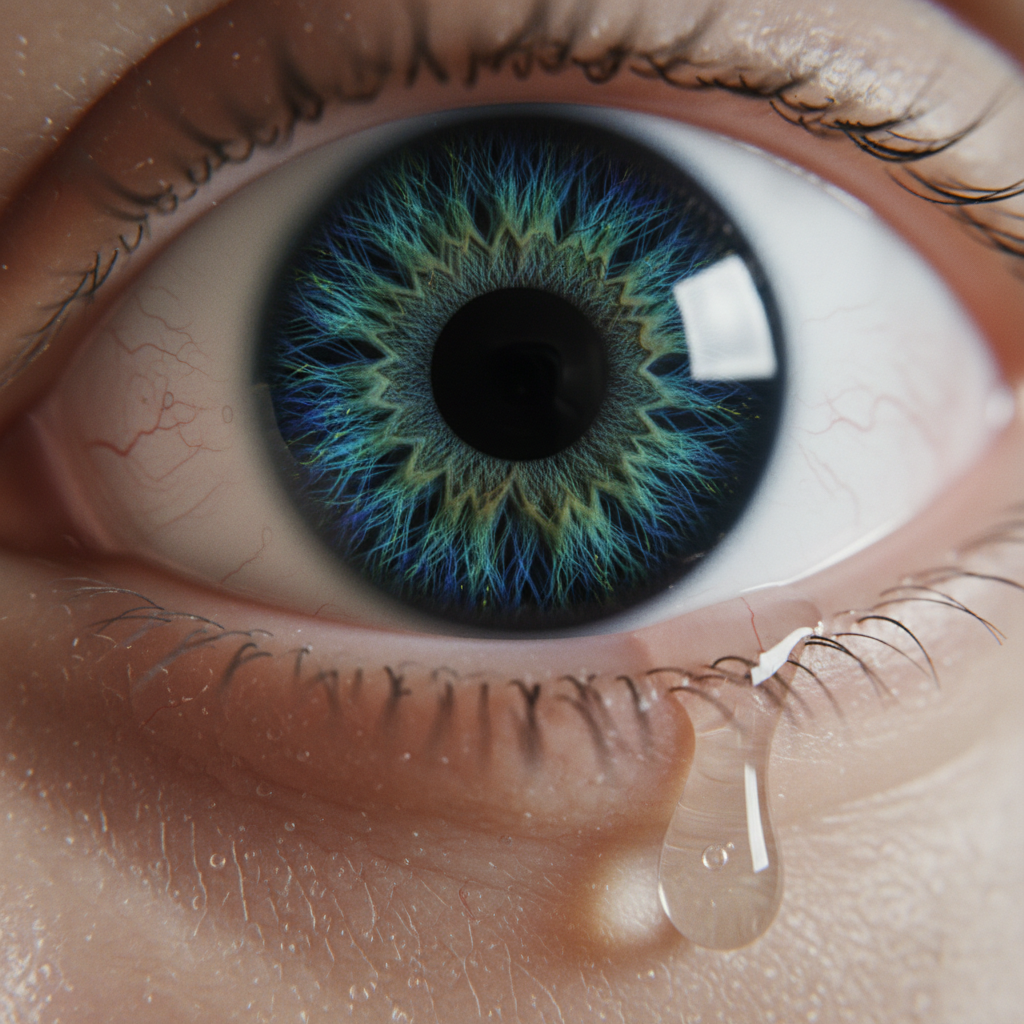
The second, and perhaps more potent, explanation is the **Disease Avoidance Hypothesis**. Many of the subtle imperfections that push an entity into the valley—asymmetrical features, jerky movements, pallid skin tone, vacant stares—are biological cues for disease, genetic defects, or death. Our ancestors who felt a strong, instinctual revulsion to these signs and kept their distance were more likely to avoid contagion and survive.
A 2011 study led by Ayse Pinar Saygin at UC San Diego utilized fMRI scans to observe brain activity. The findings were revealing: when participants viewed an android, their parietal cortex, a region involved in matching perception with motor representation, showed a significant spike in activity—a sign of intense cognitive conflict. The brain was screaming, "It looks human, but it doesn't move like one!" This is the neurological signature of the uncanny.
This deep-seated mechanism is a form of biological folklore passed down not through stories, but through genes. It’s an ancient warning system screaming that something is fundamentally *wrong* with the entity before us.
The Modern Pantheon of Uncanny Beings
While the theory is rooted in evolutionary biology, the evidence is etched into our modern culture. The uncanny valley is a graveyard of ambitious technological and artistic projects that flew too close to the sun of realism. Hollywood provides a litany of cautionary tales. Films like The Polar Express (2004) and the infamous Cats (2019) were haunted by CGI characters whose attempts at photorealism produced a gallery of soulless avatars. Their eyes lacked saccades—the rapid, unconscious movements of a living gaze—and their skin moved with a synthetic sheen, triggering a mass audience recoil.
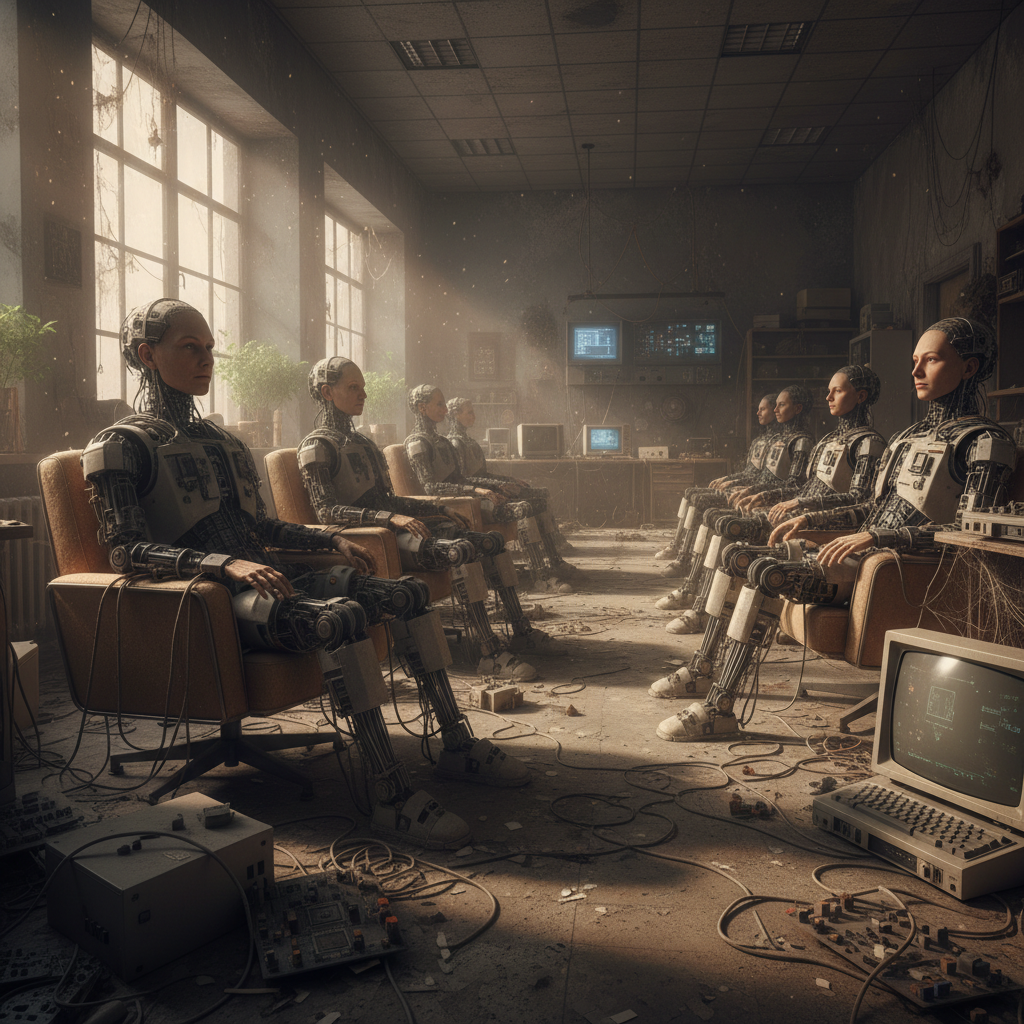
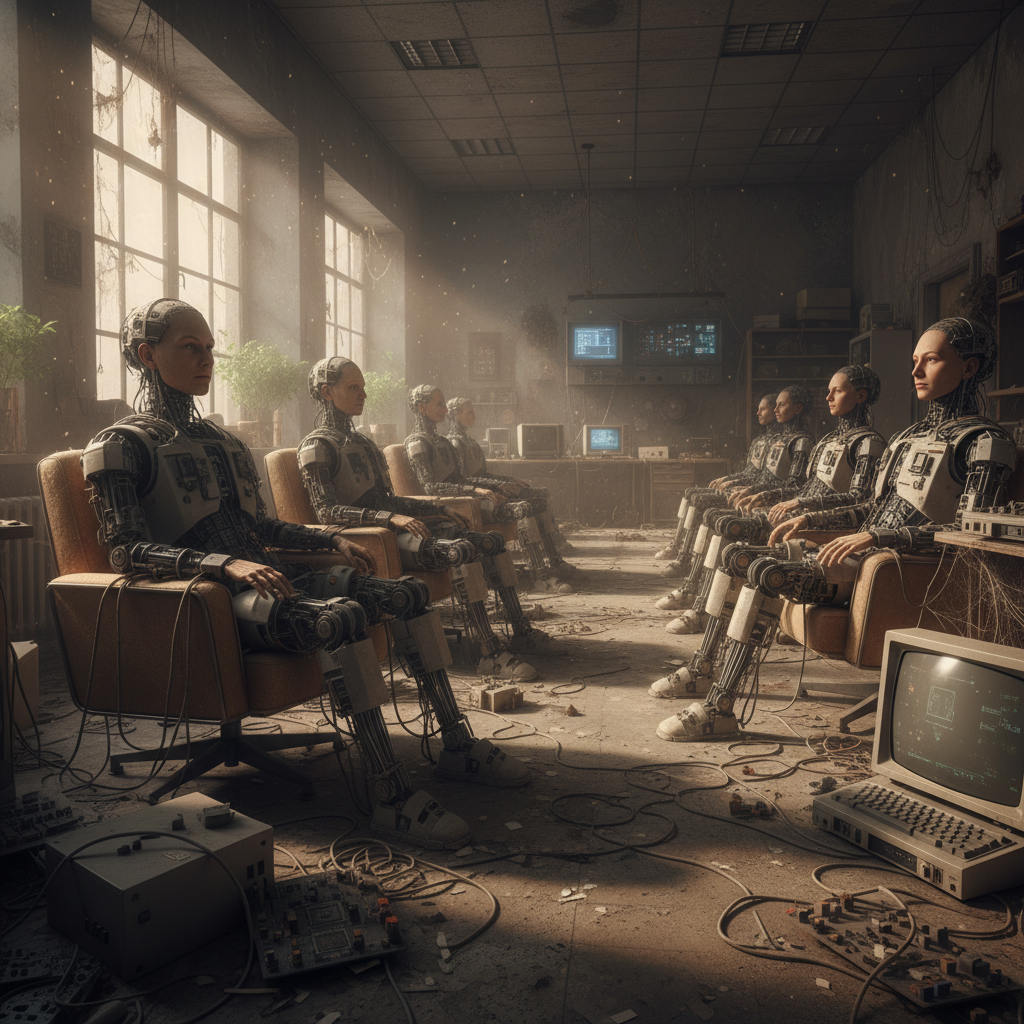
The world of robotics offers even more tangible examples. Robots like Hanson Robotics' Sophia or the Japanese Geminoid series are marvels of engineering, yet they remain primary residents of the valley. Their silicone skin, servo-driven smiles, and algorithmically generated speech create a profound disconnect. We see a human face, but our subconscious registers the lack of micro-expressions, the unnatural cadence, the absence of breath. This dissonance is the core of the experience. It’s why many find stylized, non-humanoid robots like Wall-E or R2-D2 more endearing; they are honest about their artificiality and don't attempt to deceive our human-detection systems.
Japanese robotics professor Masahiro Mori, who first proposed the concept in 1970, framed it with haunting prescience: "I believe our familiarity will increase with the degree of human-likeness… until we come to a valley. This is the uncanny valley. And I predict that it is necessary to take a big leap to cross this valley and to create a robot with which we truly feel a sense of affinity."
Mori's "valley" is now a crucial concept in design, a known hazard for anyone creating artificial beings. As explained on the Uncanny valley Wikipedia page, this dip in affinity is a predictable response to stimuli that elude easy categorization.
The Valley as a Cultural Mirror
Beyond a mere design challenge, the uncanny valley has become a potent tool in modern storytelling, a reliable mechanism for generating dread. The horror genre is its natural habitat. The creepy doll, the masked killer with a static face, the glitching ghost on a screen—all draw their power from this cognitive chasm. They represent a perversion of the familiar, turning a symbol of comfort (a doll, a human face) into an object of terror. The experience is not dissimilar to the unsettling, reality-bending nature of digital folklore phenomena like the endless, empty corridors documented in the story of how did the backrooms creepypasta start. Both prey on our fear of familiar spaces and forms being subtly and terrifyingly wrong.
This fear also taps into deeper anxieties about identity and authenticity in the digital age. In a world of deepfakes, virtual avatars, and AI-generated personalities, the question of "what is human?" is no longer philosophical but practical. The uncanny valley serves as a visceral, bodily reminder of the boundary between the real and the artificial. The revulsion we feel is our mind's last line of defense against a world where that boundary is becoming increasingly blurred. These entities are the modern internet horror characters made manifest—not spirits of the dead, but specters of an artificial future.
Key Takeaways: Mapping the Uncanny Frontier
The chill that runs down your spine when you see an overly realistic android is not an irrational fear; it's an echo of an ancient survival program. The Uncanny Valley is a fundamental aspect of the human condition, a cognitive fault line that reveals our deepest instincts about life, death, and identity. As we continue to build beings in our own image, we will repeatedly confront this chasm. Understanding it is crucial not only for designers and engineers but for anyone seeking to comprehend our relationship with technology and the myths we create around it.
- An Evolutionary Defense: The fear is a hardwired survival instinct, designed to help us avoid disease, genetic abnormalities, and potential predators disguised as kin.
- Cognitive Dissonance is Key: The uncanny feeling is triggered by a conflict in the brain's predictive models. When an object's appearance and its behavior don't match our expectations of a human, our brain flags it as a problem.
- A Tool of Modern Mythmaking: Horror and science fiction have weaponized the uncanny valley, using it to create memorable monsters and explore anxieties about technology and loss of humanity.
- The Frontier is Shifting: As technology for rendering CGI and building robots improves, the obvious uncanny triggers may fade. However, new, more subtle valleys related to voice, behavior, and emotional expression will likely emerge.
- Design Is a Choice: Creators can either face the daunting challenge of crossing the valley to achieve perfect realism or strategically avoid it by embracing stylized, non-humanoid designs that are more readily accepted.