An Introduction to the Modern Ritual
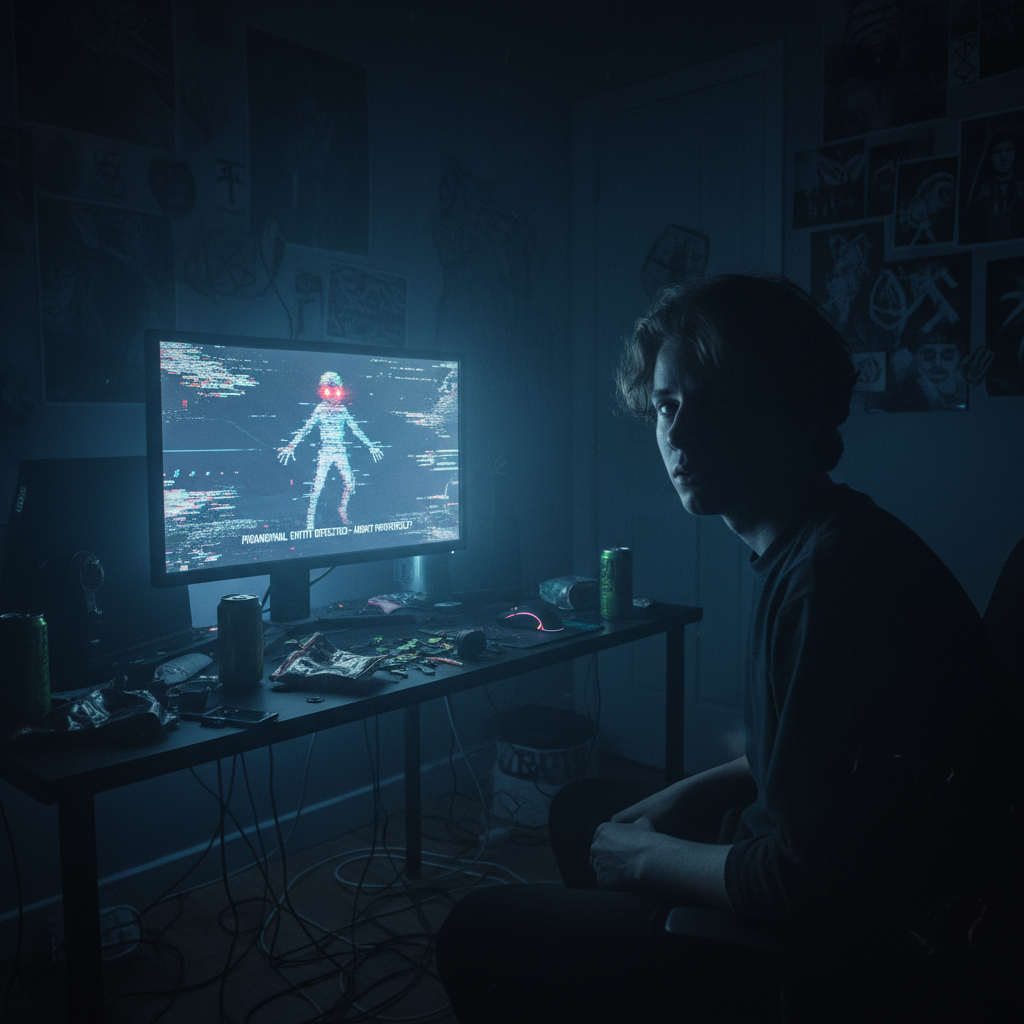
Observe the modern teenager, hunched over a glowing screen in the dead of night. The sounds emanating are not of idle entertainment but of ragged breaths, sudden gasps, and the low, electronic hum of manufactured dread. They are not merely playing; they are participating in a ritual as old as humanity itself, repackaged for the digital age. As a digital folklorist, I've analyzed countless forum threads, creepypastas, and live streams that serve as the oral traditions of this new era. The phenomenon of teens engaging with paranormal games is not a simple quest for fun. It is a structured, step-by-step descent into a controlled abyss—a digital séance where the ghosts are coded, and the haunted house is rendered in polygons. This act is a complex negotiation with fear, identity, and community. To truly understand the motivation, one must view it not as a pastime, but as a procedure for confronting the specters of the collective unconscious, one jump scare at a time. The flickering screen is the new campfire, and the stories it tells are of our most primal anxieties.
The 4-Step Procedure for Confronting Digital Phantoms
Engaging with a paranormal game is a methodical process. It's a psychological procedure with distinct phases, each designed to deconstruct reality and rebuild it within the game's horrifying logic. The following steps unpack this ritual, revealing how a simple piece of software becomes a conduit for profound psychological exploration.
-
Step 1: Answering the Call to the Void
The journey begins not with the press of a button, but with a psychological pull—a curiosity about the unknown and the forbidden. This is the 'Call to the Void,' the innate human desire to peek over the precipice. For teenagers, an age defined by boundary-testing, this pull is exceptionally strong. Psychologically, this aligns with Arousal Theory, which posits that humans seek an optimal level of physiological stimulation. The mundane safety of suburban life can leave a teenager's arousal levels low; the promise of a paranormal game is a promise of a spike—a jolt of adrenaline and dopamine in a perfectly safe container. The game is a hypothesis: 'How brave am I?' Clicking 'New Game' is the first step in conducting the experiment upon oneself.
-
Step 2: Entering the Liminal Space
Once the game loads, the player is no longer in their bedroom. They have crossed a threshold into a 'liminal space'—a transitional state where the rules of reality are suspended. Game developers are master architects of these spaces. They use a multi-sensory assault to achieve this. Visually, scenes are shrouded in oppressive darkness, punctuated by unreliable light sources. The environments often evoke the 'uncanny valley,' with designs that are almost familiar but deeply wrong. Aurally, the sound design is paramount. The distant creak of a floorboard, the static hiss from a radio, or even the weaponized use of complete silence manipulates the brain's primitive threat-detection systems. Haptic feedback from a controller makes the virtual threat feel physically present. This sensory cocoon dismantles the player's real-world orientation, making the coded phantom feel terrifyingly real.
Pro Tip: The most effective paranormal games don't rely on jump scares. They master the art of auditory dread—a distant footstep, a glitching radio, the suffocating *absence* of sound. This is a direct hack into the human brain's limbic system, bypassing rational thought to trigger pure, instinctual fear.
-
Step 3: Forging the Social Covenant
Fear, once experienced, demands to be shared. This is where the ritual becomes a communal act. The rise of platforms like Twitch and YouTube has transformed the solitary act of playing a horror game into a public performance. The player is the shaman, and the viewers are the tribe, huddled around the digital campfire of the chat window. This shared experience validates the fear, making it a tangible social currency. A collective gasp during a jump scare, the frantic typing of warnings—these are the components of a modern folklore being written in real-time. Within this space, teens forge bonds built on a foundation of shared vulnerability and eventual triumph. These are not unlike the forbidden late-night rituals detailed in The Global Encyclopedia of Urban Legends, where the thrill is amplified by the presence of fellow participants. The terror is the medium; the connection is the message.
Pro Tip: Observe the comment sections of a horror game stream. It is a live ethnographic record. Viewers aren't just watching; they're co-creating the experience. They are participating in a collective ritual, sharing warnings, gasps, and relief. The streamer becomes the modern guide, leading the tribe through the digital darkness.
-
Step 4: Achieving Catharsis and Mastery
The final step of the ritual is the resolution: conquering the fear. By navigating the haunted asylum, vanquishing the entity, or simply surviving until dawn, the player achieves a profound sense of mastery. The intense anxiety and fear built up throughout the game are released in a powerful wave of relief and exhilaration—a process known as catharsis. This transforms the negative arousal of terror into the positive arousal of excitement, a key concept in Reversal Theory. The teenager who was once a victim of the game's horrors becomes its conqueror. This provides a crucial psychological benefit: it offers a sense of control in a world where teenagers often feel they have very little. They have faced a terrifying unknown, understood its patterns, and emerged victorious. They did not run from the monster; they learned its mechanics and beat it. This is a powerful metaphor for confronting the anxieties of adolescence itself.
Troubleshooting the Descent: Common Pitfalls & Psychological Static
While this digital ritual can be a powerful tool for psychological exploration, the descent into manufactured fear is not without its risks. The veil between the game world and reality can sometimes become thin, leading to a form of psychological feedback or 'static.' Here are some common errors encountered during the process and their solutions.
- Error: Fear Bleed. This occurs when the emotions and anxieties from the game 'bleed' into the player's real life. A darkened hallway at home suddenly feels as threatening as one in the game, or a strange noise at night triggers the same fight-or-flight response. This indicates a failure to properly exit the liminal space.
Solution: Psychological Decompression. After a session, it is critical to perform a 'reality check.' This involves deliberately engaging with light-hearted, calming, or comedic content. Discussing the game experience with friends from an analytical, 'behind-the-scenes' perspective helps re-establish the barrier between fantasy and reality, grounding the player back in the safety of the real world. - Error: The Desensitization Loop. Overexposure to intense stimuli can lead to desensitization. The player finds that games which once terrified them are now mundane, prompting them to seek out more extreme or graphic content to achieve the same level of arousal. This can create an unhealthy escalating loop.
Solution: Stimulus Fasting. The most effective way to reset this psychological baseline is to take a deliberate break from the genre. A 'stimulus fast' of several weeks or months allows the nervous system to recalibrate. Upon returning, the impact of even milder paranormal content will be significantly enhanced, breaking the cycle of escalation. - Error: Social Disconnection. While paranormal games can foster community, they can also lead to isolation if the digital interaction replaces, rather than supplements, real-world connection. The shared experience becomes a closed loop, confined only to those who understand the game's specific lore.
Solution: Balancing the Ritual. The key is to ensure the social covenant extends beyond the screen. Use the game as a catalyst for real-world conversations and activities. The goal is for the digital experience to be a shared cultural touchstone, not an all-consuming reality.