Two Cases Put Wendigo Psychosis in the Textbooks — and Both Happened in the Middle of a Famine
The Snow Monster Most People Met in a Video Game
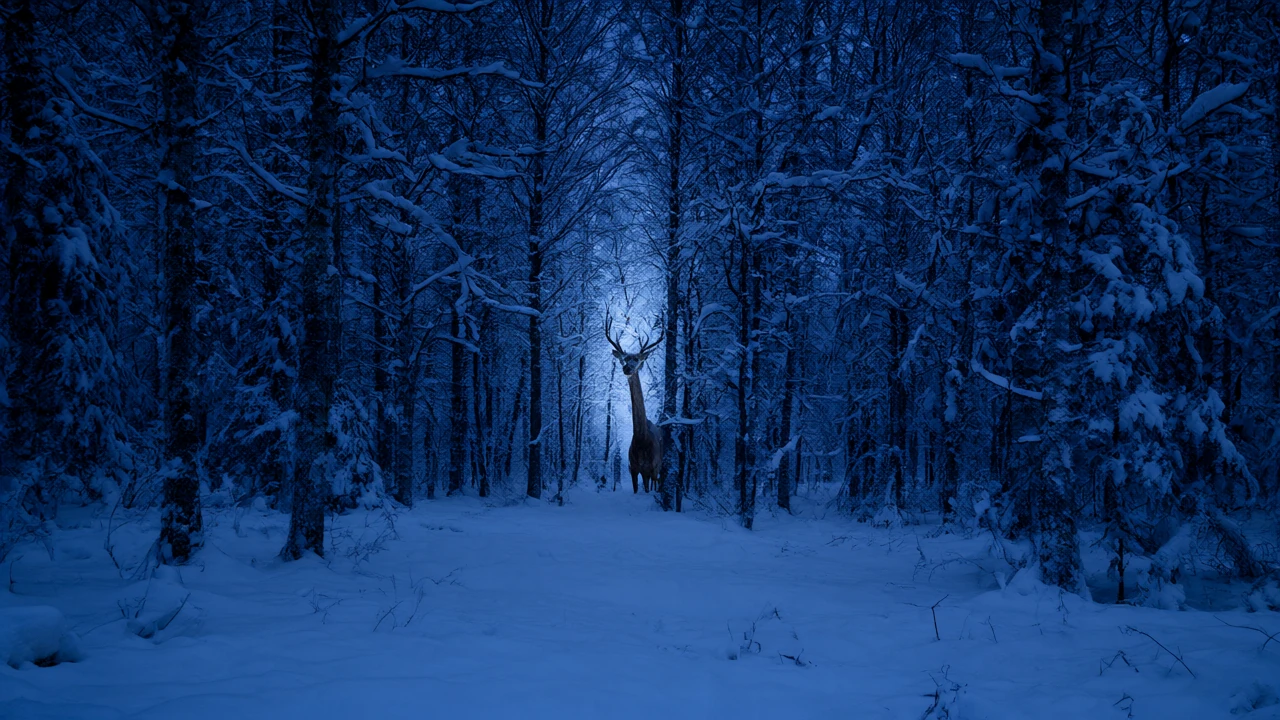
A monster tied to snowy mountains, hunger and eating people: a lot of players have run into one in the horror game Until Dawn. What the game doesn’t spell out is that the Wendigo has an actual source. It comes from the traditions of Algonquian-speaking peoples in North America, the Ojibwe and the Cree among them, where it is a cannibal spirit bound up with brutal winters, famine and greed. If you came to it through cryptid folklore, it’s worth knowing it isn’t a cryptid in the Bigfoot sense. It’s a figure from living oral tradition, and this article treats it with that in mind.
From Monster to Medical Term
What surprised me is that the legend later produced a term that shows up in psychiatric and anthropological literature: “Wendigo psychosis.” It is described as a culture-bound syndrome in which a person feels a powerful craving for human flesh and believes they are turning into a Wendigo. The Wikipedia entry lists it among modern psychiatric descriptions, and recent reviews such as this 2023 paper catalogue the associated symptoms: paranoia, anxiety, hallucinations. It has been presented as a psychiatric condition that was actually diagnosed in history. A monster story that ends up as a diagnosis is a strange thing, and it’s why I wanted to look closer.
The Two Cases Everyone Cites
The best-known case is Swift Runner, a Cree man in Alberta, Canada, who in 1878 killed and ate his own family during a famine winter. He became the first person hanged in the Northwest Territories. The other is Jack Fiddler, an Ojibwe-Cree shaman arrested in 1907 for killing a member of his community who was believed to have turned into a Wendigo. Both cases are routinely offered as proof that the condition exists. But look at the setting of each: extreme starvation, and a community with its own fear of the Wendigo and its own way of dealing with someone thought to be one. Neither case is clean evidence of a disorder separate from those pressures.
Real Events, Questionable Label
My own view is that these cases probably did happen, but a straightforward mental illness is not the most convincing explanation. The more plausible reading is that, under extreme famine, people used the Wendigo legend to explain and to fear extreme behavior, and outside researchers later gathered those events into a “syndrome.” That makes it less a disease than a mixture of legend, trauma and an observer’s label. Our piece on how rumors cause mass hysteria describes a related mechanism: a community’s shared fear can produce behavior that looks like a disorder from the outside.
Who Gets to Diagnose Whose Culture
Anthropologists have made a version of this argument themselves. Some hold that Wendigo psychosis was a concept created when researchers confused local people’s own account of the Wendigo (the emic view) with an external classification (the etic one), rather than a stably diagnosed illness. Early papers like Hay’s 1971 study describe it in terms of a desire to eat human flesh, which shows how far the clinical language had already traveled from the original story. I find the topic interesting for that reason. It sits across legend, psychiatry and an uncomfortable question about how outsiders put diagnoses on other people’s cultures.
Why the Monster Survived the Diagnosis
The Wendigo kept going in popular culture long after the medical term lost its footing, in games, films and novels, usually stripped of the context that made it frightening in the first place: a winter with nothing to eat. Compare that with how cryptid sightings get explained away by biology. The Wendigo can’t be explained away that way, because what it described was never an animal. It was a fear of what hunger and isolation can do to people.