The Threshold Object: Why the Mirror Demands Ritual
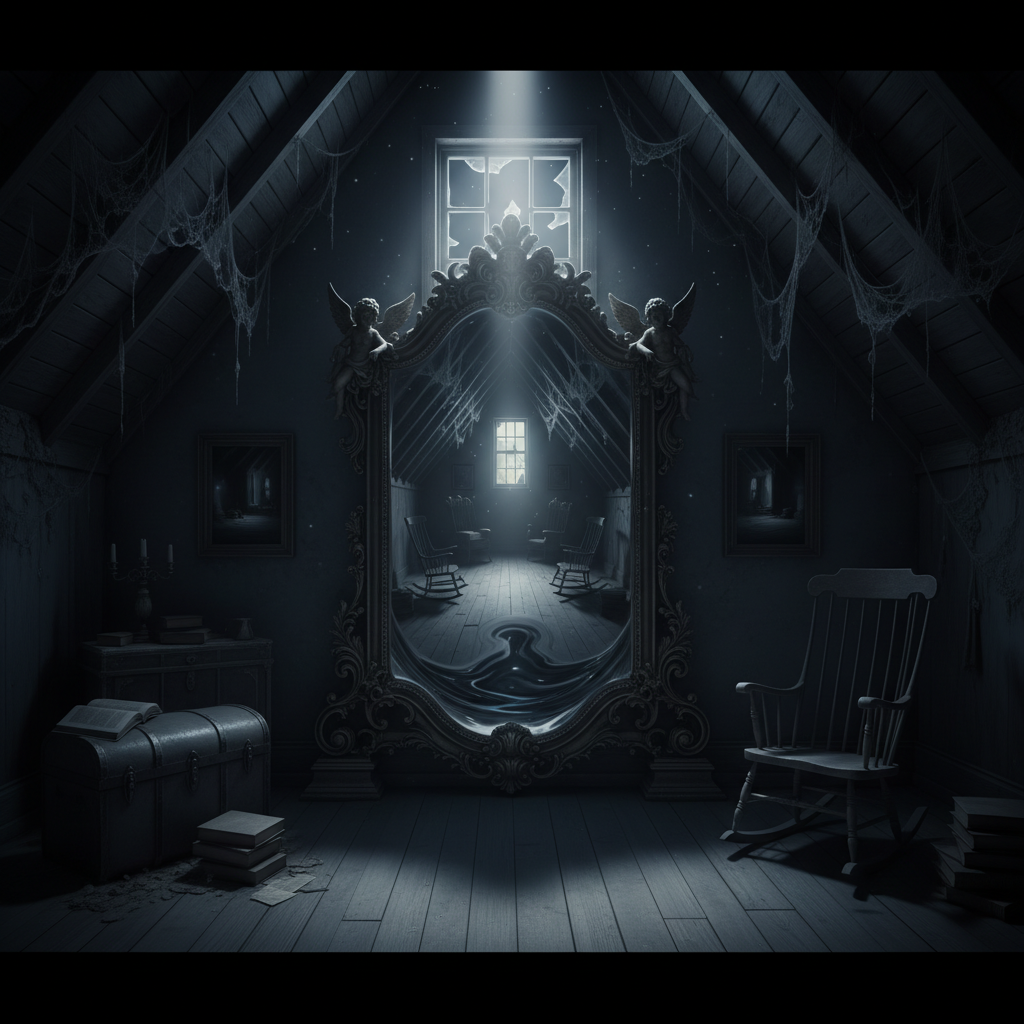
A mirror is not merely glass coated with a reflective substrate. From a folkloric and psychological perspective, it is a quintessential threshold object—a physical manifestation of a liminal space. Its function is simple yet profoundly unsettling: it duplicates reality but reverses it. This perfect, yet flawed, imitation is the seed from which all mirror rituals grow. The human brain, wired for pattern recognition, perceives the person in the mirror as both 'self' and 'other.' This cognitive dissonance is the entry point for superstition and fear. The reflection does not breathe, it has no warmth, it possesses no independent thought, yet it mimics our every move with silent precision. This uncanny valley of the self is what elevates the mirror from a tool of vanity to an instrument of divination and a potential gateway. Ancient cultures, lacking the physics of light refraction, logically concluded it was a captured soul, a window to an ethereal plane, or a direct link to the subconscious. The Aztecs used polished obsidian as spiritual tools; these dark, smoky surfaces were not for clear reflection but for scrying into the divine, as documented in studies on Mirrors in Mesoamerican culture. The act of gazing was an act of summoning. This is the foundational logic: if a world exists on the other side of the glass, then specific actions—rituals—must be the key to interacting with it.
From Ancient Scrying to Digital Seances: The Evolution of a Portal
The history of mirror rituals is a direct reflection of humanity's evolving fears. In ancient Greece, catoptromancy (divination using mirrors) was a respected, if feared, practice. Hydromancy, using the surface of water, served a similar purpose. A sick person’s reflection in a bowl of water could predict their fate; a clear image meant recovery, a distorted one, death. These were rituals tied to survival, harvest, and the will of the gods. Fast forward to the medieval period, and the mirror’s role shifts. It becomes associated with demonic pacts and witchcraft, a tool to trap or summon malevolent entities. Covering mirrors in a house of mourning—a practice still observed today—originates from the fear that a departed soul could become trapped in the reflection, unable to pass on. Now, in the digital age, these primal fears have not vanished; they have merely migrated. They thrive in the dark corners of the internet, codified into shareable, playable formats. Legends like Bloody Mary or the Three Kings Ritual are the direct descendants of ancient scrying, but their context has changed. The goal is no longer divine knowledge but a raw, visceral thrill—a practice known as 'legend tripping.' These modern rituals, meticulously documented on forums and creepypasta wikis, represent a new chapter in The Global Encyclopedia of Urban Legends. They demonstrate how our deepest anxieties about the unknown persist, simply repackaged for a generation fluent in the language of digital horror.
Comparative Analysis: Ancient Divination vs. Modern Paranormal Games
While modern internet rituals and ancient scrying both utilize reflective surfaces to pierce the veil, their intent, methodology, and perceived risks differ dramatically. Ancient practices were often exclusive, performed by trained priests or oracles for communal benefit, whereas modern rituals are democratized, designed for any teenager with a mirror and a data connection. This table breaks down the core distinctions between these two forms of mirror-based folklore.
| Attribute | Ancient Scrying (e.g., Catoptromancy) | Modern Internet Rituals (e.g., Bloody Mary) |
|---|---|---|
| Primary Goal | Divination, seeking knowledge from gods or spirits, predicting future events (health, harvest). | Thrill-seeking, testing bravery, attempting to summon a hostile entity, generating a paranormal experience. |
| Practitioners | Priests, oracles, trained specialists. Often a respected or feared role in society. | Primarily adolescents and young adults, often performed in groups as a social challenge. Explores themes of why teens play paranormal games. |
| Tools | Polished metal (bronze, silver), obsidian, bowls of water, consecrated objects. Tools were often sacred. | Common household items: bathroom mirror, candles, salt, easily accessible objects. The ordinary is made terrifying. |
| Source of Power | Believed to be derived from deities, ancestral spirits, or elemental forces. The power is external. | Believed to be derived from the ritual's own rules, the power of belief/fear, or a specific named entity. The power is summoned. |
| Perceived Danger | Receiving a grim prophecy, angering a deity, spiritual pollution. Danger is often abstract and long-term. | Physical attack by the summoned entity, psychological trauma, demonic possession. Danger is immediate and personal. |
| Cultural Role | Integrated into religious, social, or political systems. Served a functional purpose within the culture. | Subcultural phenomenon, existing outside mainstream belief systems as a form of entertainment and modern folklore. |
Deconstructing the Reflection: The Psychology Behind the Terror
The terrifying success of mirror rituals is not rooted in the supernatural, but in predictable and exploitable neurological phenomena. When you stare at your own reflection in a dimly lit room, your brain begins to play tricks on you. This is not a ghost; this is the Troxler effect. This perceptual phenomenon occurs when you focus on a single point; unchanging stimuli in your peripheral vision begin to fade from your consciousness. As parts of your face fade, your brain, desperate to fill in the gaps, improvises. It pulls from your subconscious fears, memories, and archetypes, creating monstrous distortions. Your own face morphs into something alien. Add to this the power of suggestion—the chants, the specific rules of the game—and you have a potent psychological cocktail. The darkness creates sensory deprivation, heightening auditory and visual sensitivity. Every creak of the house, every flicker of the candle, is amplified and attributed to the summoned entity. This is a classic case of Pareidolia, the tendency to perceive meaningful patterns in random noise. You are not witnessing a spirit emerge from the glass; you are witnessing your own brain's terrified attempt to make sense of ambiguous sensory input under extreme duress. The true horror of the mirror ritual is not what's on the other side, but what was already inside your own mind, waiting for the right conditions to be projected outward. This entire process is a core component of the psychology of legend tripping, where environment and expectation combine to create a self-fulfilling prophecy of fear.
The Future of the Looking-Glass: Reflections in a Black Mirror
The mirror is no longer just polished glass on a wall. It is the black, reflective screen of your smartphone, your tablet, your laptop. These devices are our new portals. They reflect our faces back at us while simultaneously connecting us to a vast, unseen world of information and other consciousnesses. The modern mirror ritual is evolving beyond the bathroom. It's found in 'cursed' video files, augmented reality horror games that overlay ghostly figures onto our real-world environment, and algorithmically generated content that seems to know our deepest fears. The fundamental principles remain the same: a reflective surface, a focused gaze, and the expectation of seeing something beyond the veil. As technology becomes more integrated with our perception of reality, the line between the reflected world and our own will continue to blur. The next generation of mirror rituals may not require candles and chants, but Wi-Fi signals and QR codes. The enduring power of these practices reveals a fundamental human need: to confront the unknown, to test the boundaries of our own reality, and to find meaning—or terror—in our own reflection.