Where Did “Light as a Feather, Stiff as a Board” Come From — and Why Does It Work Without Any Ghosts?
The Game a Summer Camp Teacher Taught Us
When I was a kid, a group of us once sat in a circle and played this game. In the English-speaking world it’s called “light as a feather, stiff as a board,” and it gets passed around between children as one of the games you’re supposed to try at a sleepover. In my case it wasn’t a sleepover. It was a summer camp, and it was one of the teachers who led us through it. It belongs on the same shelf as the other children’s ritual games we cover here, though I came away from it with a different feeling than I did from most of them.
Everyone Knew How Heavy He Was
What unsettled me wasn’t a story or a chant. It was the weight. The kid lying on the floor was clearly heavy, and every one of us knew it. Yet each of us only put in a tiny amount of effort, and the whole person came up off the ground. I was scared, honestly, because the thing I could feel in my own two fingers didn’t match what my eyes were telling me.
How It’s Played, as Far as I Remember
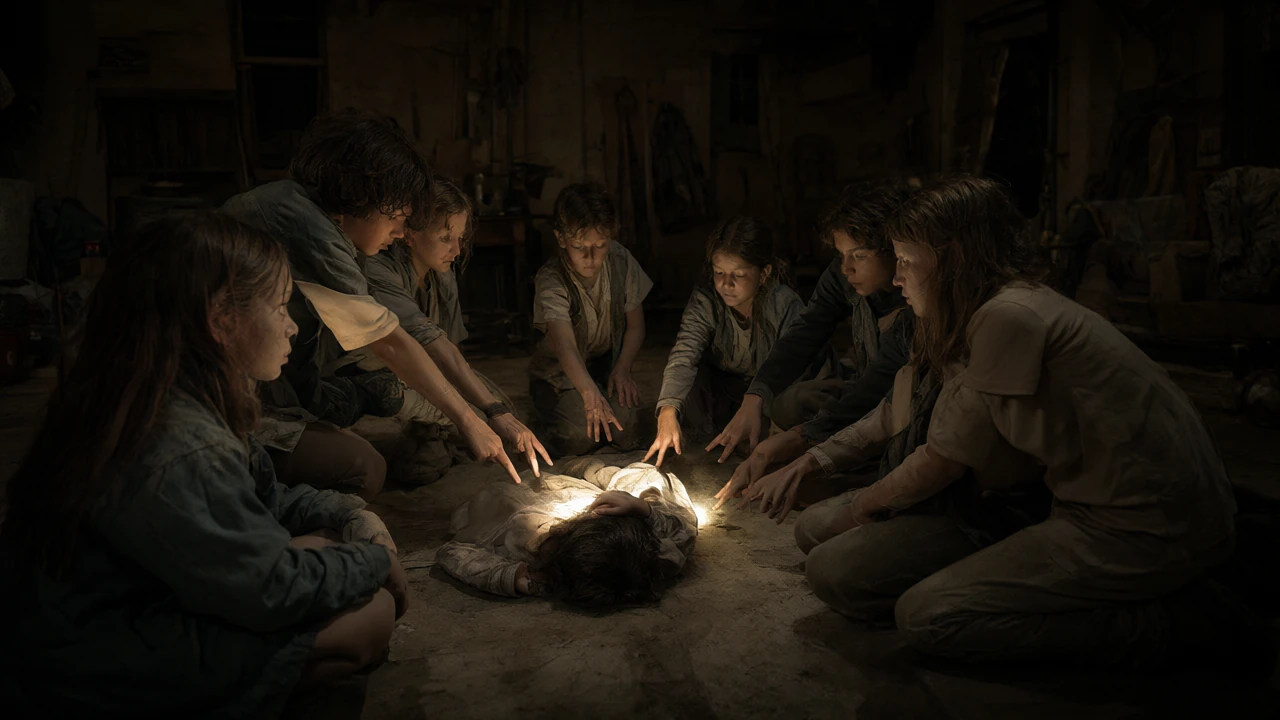
One person lies down. The rest of us, six or seven I think, though I can’t be certain anymore, kneel around them and each slide two fingers under their body. Then there is a ritual of some kind, but I can’t remember the details. Everyone says the chant together, “light as a feather, stiff as a board,” and then all of us lift at once. And the person goes up. That’s the whole game. Step-by-step guides follow roughly the same shape, with the story or ritual in the middle changing from group to group.
Pepys, the Plague, and the Oldest Written Trace
The earliest known written reference usually cited is the diary of Samuel Pepys, in an entry dated 31 July 1665, which happened to be the year of the Great Plague of London. Lit Hub’s history of the game and the Wikipedia article both start there. Accounts differ on whether Pepys saw it himself or recorded a story told to him, and nobody can say whether what he described is the same game we played. So the diary is the oldest mention we have, not a proven origin.
The Bed-of-Nails Lesson That Explained It
Around that time the teacher happened to bring up the bed of nails. If you spread your weight over enough points, he said, a person can lie on a bed of nails without being hurt. I made the connection right away. We were all light children to begin with, and if the load was spread widely enough, lifting someone with two fingers didn’t seem like a hard thing at all.
Not a Ghost Game, an Experiment
I felt the science behind it even at that age, and I still do: this was never an ordinary make-believe haunting. It also seems very different to me from the rituals that only work if you believe in them, like Kokkuri-san or the games in our history of spirit-summoning games. This one doesn’t ask you to believe in any supernatural power, and the result doesn’t disappear if you don’t. It’s something you can repeat and check. Compare the Midnight Game, where a hard-to-meet rule explains away every failure: here the thing actually happens, and the only mystery is why it feels the way it does.